- August 13, 2012
This seems to be the strategy of the UK Government, as the Health Secretary Andrew Lansley said they want to reduce by 50% the number of smokers in the UK, in ten years.
This is an actualization of the “war” on tobacco that started five or six years ago, when smoking was banned from public and work places. Later in 2011 cigarette vending machines were also banned.
This month, when the prohibition for large shops to display tobacco & cigarette advertising took place, (but referring to the one year old debate and decision), this action will include smaller ones by 2015 – another decision that has been up in the air for a long time has been made: the use of plain cigarette packaging.
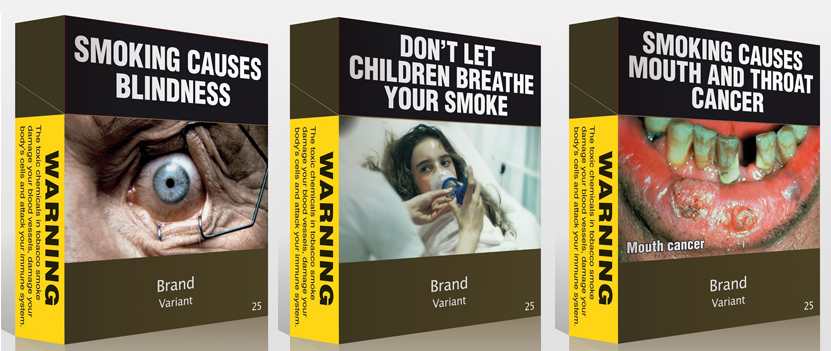
While not pronouncing myself on the Government decision, strategy and scope, it’s easily understandable that doing so basically means “killing the branding discipline”, as the newest packages won’t be anymore related to the industry, the company guidelines and all that they represented until now, as they won’t allow for proprietary typefaces nor logos – as they’ll set every different name like Marlboro, Lucky Strike, Camel to name a few in one standard typeface, Lucida Sans, designed by Kris Holmes and Charles Bigelow in 1985.
The base color for the package would be dark olive green (Pantone 448C), while the health warnings will cover nearly 75% of the package. Right now it’s 35%, leaving enough space for logo & brand design.
It is possible to see and imagine what the newest package will look alike, thanks to the Australian market, where this measure was presented and proposed firstly, for it to take place in December, current year.
Images: Reuters
What make the news important now, is the decision of a few days ago to officially adopt the strategy in the UK too (timing near to the Australian one), a more profitable market for the tobacco industries, as the percentage of smokers here is nearly to 25%, whereas Australia’s one is 15%. Doing so will set an important precedent in the European territory.
While this may be able to help reduce, if not erase the “younger than sixteen years old” smokers plague, it will certainly make some displays and stands a lot more boring and meaningless also to some older willing, brand affected consumer.
What would be left of Marlboro, without its beautiful red color?
Starting from this, can you imagine a world without branding?
Contributor

- 1 posts


